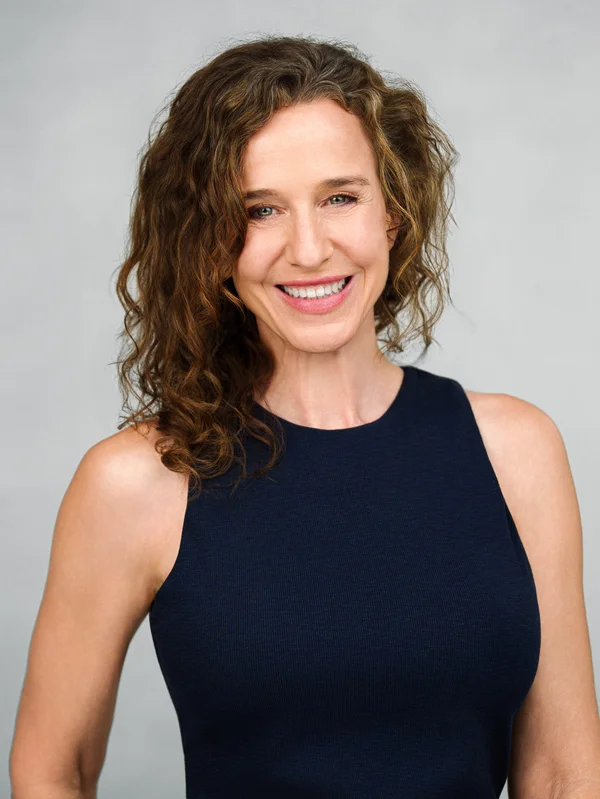
Trauma & Couples Therapy Specialist — Washington & Idaho
I provide specialized trauma therapy and couples counseling to clients throughout Washington and Idaho — in person
at my office in Chattaroy, Washington, and via secure, confidential telehealth statewide. My clinical focus includes
EMDR therapy,
attachment-based trauma treatment, Gottman Method couples work, complex trauma and PTSD recovery, and coercive control recovery — including cult involvement,
high-control religious groups, and psychologically manipulative relationships.
If traditional talk therapy has helped you understand what happened but hasn't quite reached the place where it
actually lives — in your body, your sense of self, your ability to trust your own perception — you're in the right
place.
My approach integrates EMDR, attachment-focused therapy, and the Gottman Method within a framework I've developed
called Soul Unity
Therapy. The premise is simple but it changes everything: healing isn't about fixing what's broken. It's about
helping you reclaim the parts of yourself that were always whole — the parts that got buried, doubted, or
systematically silenced by trauma.
That means we work with both the neurobiology of what happened to you and the deeper questions — about identity,
meaning, and self-trust — that these experiences fracture. Your nervous system matters here. So does your inner
wisdom. Your intuition is not a liability. It's data.
I have practiced as a therapist since 2008. I hold a Bachelor of Arts in Psychology from the University of
Washington (1992) and a Master of Counseling in Marriage, Family and Child Therapy from the University of Phoenix (2007), and
am licensed as a Marriage and Family Therapist in both Washington (LF60231149) and Idaho (4171583). My EMDR training
(Two-Part Basic Training, 2009) was completed through the EMDR Institute, Inc. — the foundational training developed
by Francine Shapiro, Ph.D., the originator of EMDR. I have also completed Level 2 training in Gottman Method Couples
Therapy — Assessment, Intervention, and Co-Morbidities — through The Gottman Institute, and have been a Professional
Member of the American Association for Marriage and Family Therapy (AAMFT) since 2005. I see clients in person at my
home office in Chattaroy, Washington, and via secure telehealth throughout Washington and Idaho.
My deepest clinical expertise sits at the intersection of trauma and identity — specifically with people whose
sense of self was systematically dismantled by another person or system. This shows up differently depending on the
client: for some it's the fog of leaving a high-control religion, where they suddenly don't know which of their
beliefs were actually theirs. For others it's the aftermath of a relationship where their judgment, memory, and
perception were constantly questioned until they stopped trusting themselves entirely. For others still it's childhood
— attachment wounds that reorganized the nervous system around vigilance rather than safety, and that keep showing up
in adult relationships in ways that feel confusing and hard to shift.
What these experiences share is that healing requires more than insight. Understanding what happened doesn't
automatically restore access to your own inner knowing. That's where EMDR comes in — working at the level of memory
encoding and nervous system response, not just narrative. And it's where the relational dimension of therapy matters
enormously: the experience of being consistently seen, taken seriously, and never told what your experience means.
Clients who have spent years inside high-control systems — religious, relational, or cultic — often describe a
similar moment early in our work together: the disorientation of being asked what they think rather than told what to
think. That question — what do you think? — can land as almost foreign at first, because their own perspective has
been treated as suspect for so long. It points at what I'm aiming for in every session: making space for you to
remember that you are the authority on your own experience. Not as a technique. As the actual work.
For couples, I bring the same framework to bear — the Gottman Method's research foundation gives us a precise map
of what predicts disconnection and what restores it, and attachment theory helps us understand why the same argument
keeps happening even when both people want it to stop. We work with the cycle, not just the content of the fights. And
we work with the nervous system states underneath — because two activated nervous systems cannot do repair work, no
matter how much both people want to.
Whether you're processing childhood trauma, recovering from a controlling relationship, rebuilding after leaving a
high-demand group, or trying to find your way back to each other as a couple — your capacity for healing is not in
question. You're not starting over. You're finding your way back to yourself.
Janice LaFountaine, MS, LMFT