• Reclaim Your Wholeness
  • About
  • Contact
  • Services
    • Soul Unity Therapy
    • EMDR Therapy
    • PTSD & Complex Trauma
    • Couples Therapy
    • Cult Recovery & Coercive Control Therapy
    • What to Expect
  • Client Testimonials
  • Insights & Healing
  • Client Resource Portal

Insights and Healing

Living With—and Leaving—a Narcissistic Partner: The actual experience and the path toward healing

navigating the narcissistic abuse cycle staying or leaving janice lafountaine lmft

If you're reading this, you may be in a relationship that confuses you deeply. The person you love can be charming, attentive, even adoring—and then, without warning, cold, critical, or cruel. You find yourself walking on eggshells, trying to predict which version of them you'll encounter. You've started questioning your own perceptions, wondering if you're somehow the problem.

Or perhaps you've already left and are trying to make sense of what happened. Why did you stay so long? Why is it so hard to stay away? Why do you miss someone who hurt you so much?

These experiences are far more common than you might think, and they follow patterns that are well-documented in clinical literature. Understanding these patterns—the cycle of abuse, the neurobiological reasons it's genuinely hard to leave, and the specific work of recovery—can help you move from confusion to clarity, from survival to genuine healing. You're not alone in this, and what you're feeling makes complete sense.

Read more …

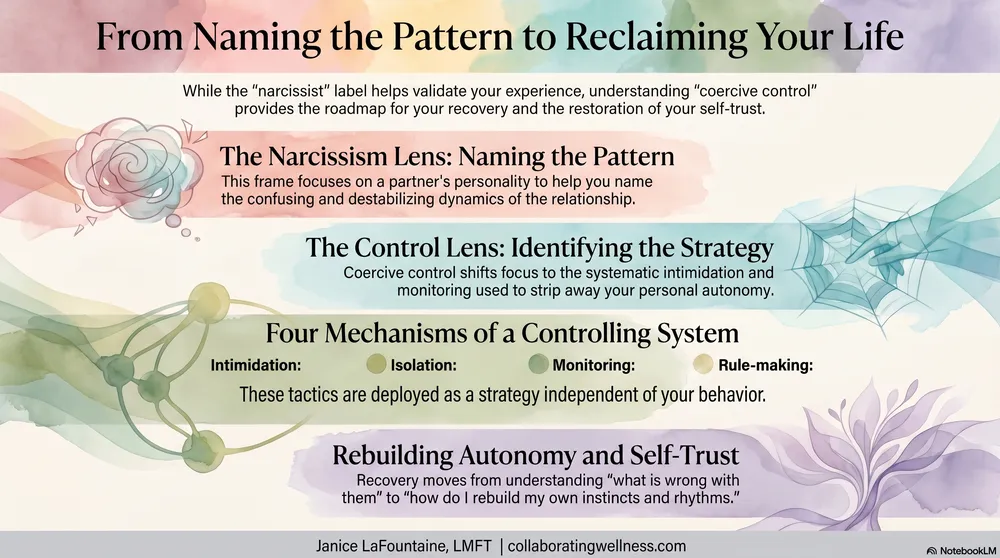
Why "Narcissist" Became the Label We Can't Stop Using

Narcissistic Patterns Deeper Look

Unpacking pop psychology's obsession with the term—and what's actually happening clinically

Open any social media app and scroll for a few minutes. You'll encounter content about narcissists: how to spot them, how to leave them, how to heal from them. The term has become cultural shorthand for anyone who's selfish, manipulative, or emotionally unavailable. Your difficult ex? Narcissist. Your controlling parent? Narcissist. Your self-absorbed coworker? Definitely a narcissist.

This linguistic explosion reflects something real and important—people are trying to name experiences of profound mistreatment and manipulation that often went unacknowledged by therapists, family members, and society at large. The word gives form to experiences that were previously dismissed with "that's just how they are" or "you're being too sensitive." For many people, discovering the term "narcissist" was the first time someone validated what they'd been living through.

But the mainstreaming of a clinical term has also created complications. When everyone who hurts us becomes a narcissist, we may be obscuring more than we illuminate—both about these difficult people and about what actually helps us heal from the damage they cause. Let's unpack this together.

Read more …

Is It Really Trauma Bonding

The Truth About Trauma Bonding

Why the Internet Gets This One Wrong — and Why Precision Can Save Your Life

Understanding a widely misused term—and what your relationship actually needs

You see it everywhere now—social media posts, podcast discussions, conversations with friends. Someone had a difficult breakup, and suddenly: "I was trauma bonded." A coworker stays in an unfulfilling job: "Must be trauma bonding." A friend tolerates rude behavior from family: "That's trauma bonding, right?"

The term has become cultural shorthand for "I stayed when I should have left." And while the widespread recognition of this concept represents important progress in understanding abusive relationships, something valuable gets lost when clinical terms become catch-all explanations for every disappointing relationship dynamic.

Let's talk about what trauma bonding actually is—and what it isn't.

Read more …

Reclaiming Your Financial Soul: Seven Pillars of Autonomy After Coercive Control


Reclaiming Your Financial Soul PillarsThe healing pathway forward after financial coercion

If you are starting here, know this: The devastation detailed in Part 1: The Financial Coercion Blueprint was not random confusion; it was a systematic attack on your competence. Now, we move beyond the recognition of the wound to the sacred work of Autonomy Reclamation.

Introduction: The Journey Back to You

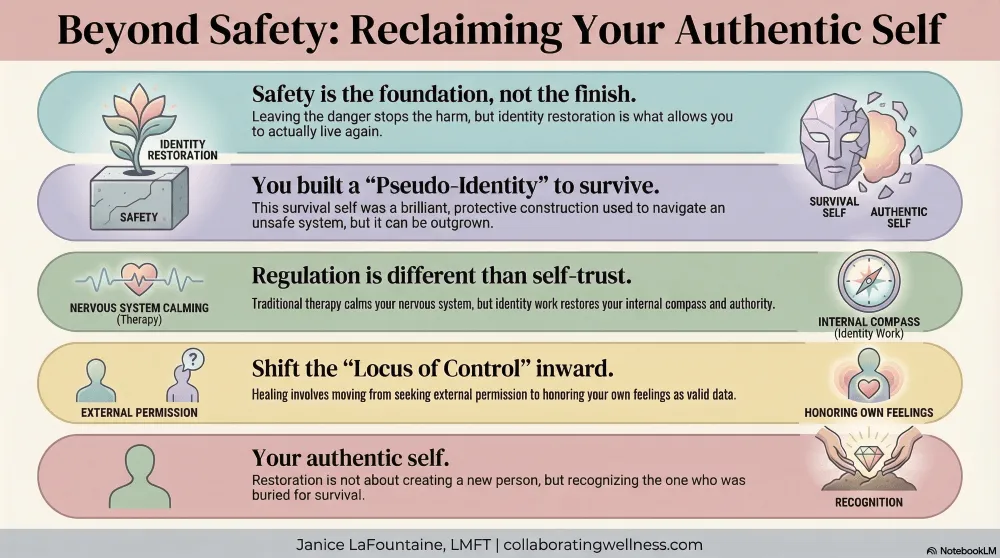
You did not break. You adapted. Every symptom you carry—the hesitation, the panic around a budget, the deep wells of shame—is evidence of a nervous system that learned to survive systematic control. But surviving is not the same as living.

Your journey toward financial sovereignty is not about becoming "smarter with money"; it is a sacred act of trauma recovery and reclaiming your inherent worth and autonomy.

This is the core of Soul Unity Therapy: we approach healing not as fixing a flaw, but as integrating the fractured parts of yourself—the capable mind, the adaptive nervous system, and the worthy soul.

The return to financial health is a return to you. It is the visible proof that the danger has passed. This intentional journey is structured by seven powerful pillars that transform survival into true sovereignty.

Read more …

The Financial Coercion Blueprint: How Money Becomes a Weapon of Control

The Financial Coercion Blueprint

How Money Becomes a Weapon of Control

And how to recognize the patterns that keep survivors trapped

The Pattern Nobody Talks About

She had two master's degrees. A successful career before the marriage. She could negotiate million-dollar contracts at work—but couldn't explain why she needed $40 for groceries without a interrogation.

He earned six figures. Managed a team of 50 people. Made complex strategic decisions daily—but his wife had passwords to all his accounts and he had to ask permission to buy lunch.

This is financial coercion. And it's one of the most devastating—and least understood—forms of control in abusive relationships.


Most people recognize the visible markers of abuse: raised voices, physical intimidation, isolation from friends. But financial coercion operates in the shadows, creating invisible chains that are just as binding—and often harder to escape—than physical violence.

Read more …

More Articles …

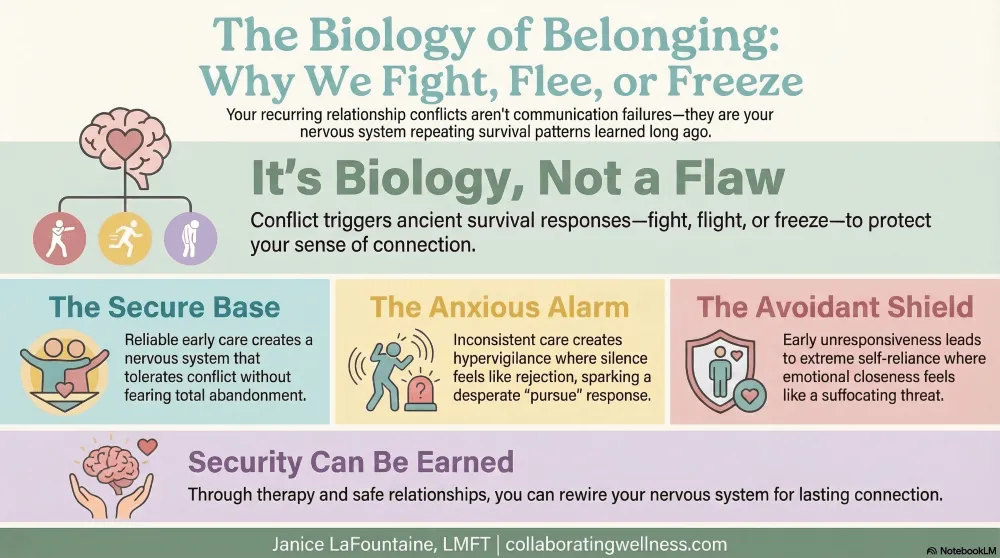
  • How Your Fight Cycle Is Really a Cry for Connection
  • The Reality of Shunning
  • Surviving the Holidays When Your Family Feels Like a Cult: A Therapist's Guide to Protecting Your Peace
  • When AI Chatbots Become Too Real
  • 1
  • 2
  • 3

Page 1 of 3

Janice LaFountaine, LMFT

Specialized therapy for trauma recovery, PTSD, and conscious life-path work. I provide a compassionate, collaborative space to help you reclaim your safety and find your way back to yourself.

"Telehealth in Washington & Idaho"

Fees & Insurance

Individual Therapy (60 mins): $140
Insurance: Most major plans accepted.
I encourage you to contact your provider directly to verify your specific coverage details prior to our first session.

About us

  • About me
  • Start a Conversation
  • Client Reviews

Services

  • Soul Unity Therapy
  • EMDR Therapy for PTSD & Complex Trama
  • PTSD & Complex Trauma
  • Research-Based Couples & Relationship Therapy
  • Cult Recovery & Coercive Control Therapy
© 2025 Janice LaFountaine, LMFT | WA License: LF60231149 | ID License: 4171583
  • Reclaim Your Wholeness
  • About
  • Contact
  • Services
    • Soul Unity Therapy
    • EMDR Therapy
    • PTSD & Complex Trauma
    • Couples Therapy
    • Cult Recovery & Coercive Control Therapy
    • What to Expect
  • Client Testimonials
  • Insights & Healing
  • Client Resource Portal